Were the Old Believers Damned. On the Lack of Physical Communion.
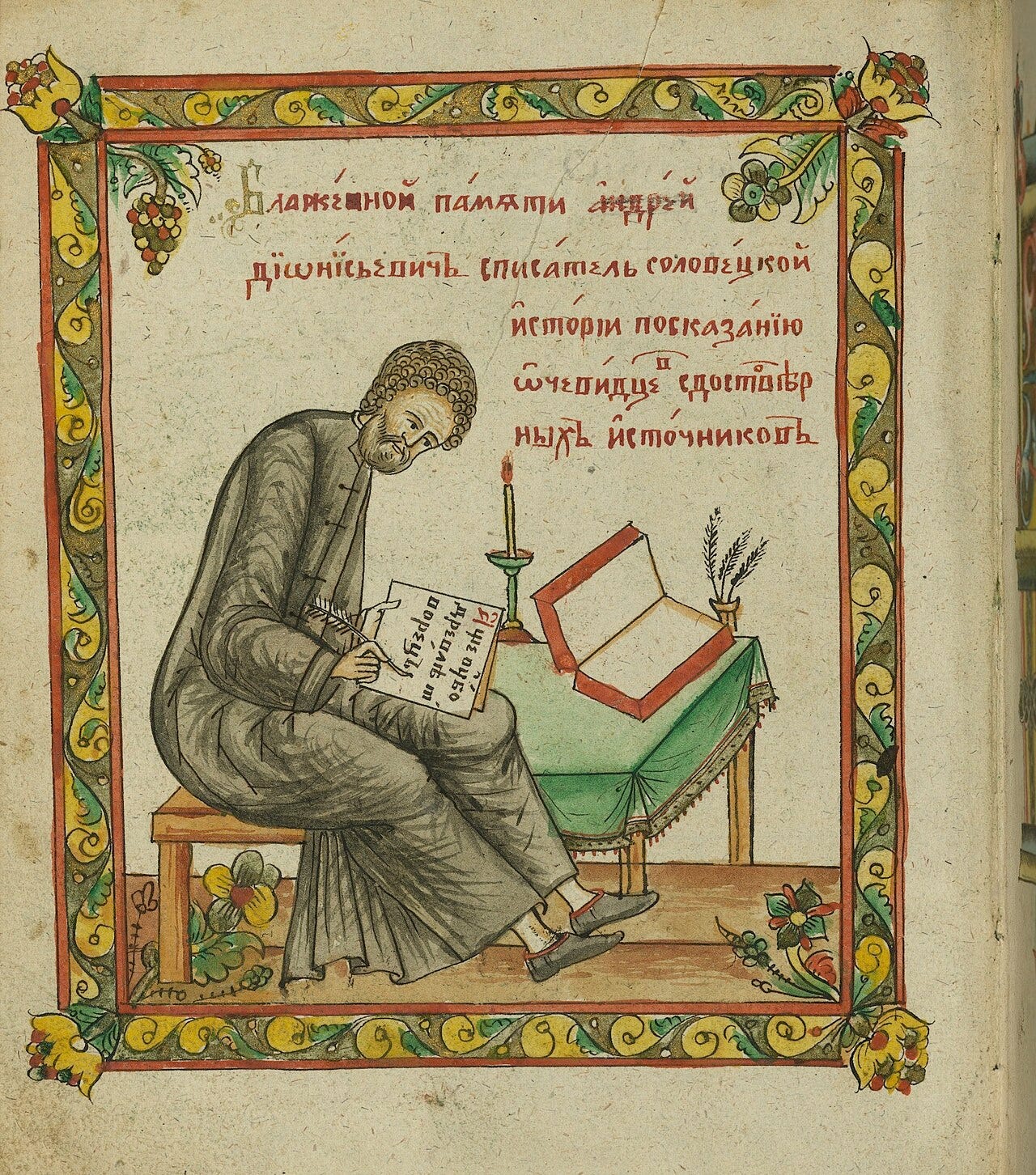
In the aftermath of the Nikonian councils of 1666, the priesthood ceased among Old Believers. This is not disputed by anyone, and indeed when, at the latter half of the 19th century a Nikonian bishop was received by a group of Old Believers, they went to great lengths to defend and explain how it was possible that a priesthood could be restored after an absence of almost 200 years.
There were different approaches to dealing with this tragic reality among the faithful. Some believed that it was possible to accept priests from heresy, as priests. Most, however, either did not have such an opportunity, or opposed even the possibility.
The problem for the Old Believers went beyond the academic, ecclesiological question of the validity of heretical sacraments. With no bishops, under whose authority does a renegade priest offer sacrifice? And who can receive such priests back into the fold? Such such even be called a “Church”?
The answers to these questions divide the “popovtsy” and the “bezpopovtsy” – the priestly and the priestless Old Believers (pop means priest, and is pronounced like pope). I will not go further into their respective understandings here.
For those who wish to read more, I have published several books that deal with the Priestly Old Believer position: Defense of the Old Believer Hierarchy, by Melnikov; The Church of Christ Temporarily Without a Bishop, by Usov; and the best of the bunch, Justification of the Old Believer Church, by Arseny Uralsky.
Today, however, I will speak of another perspective, one that was more historically reflective of the Old Believer thought and experience, specifically as it relates to the Eucharist.
For the bezpopovtsy, being without bishops or a priesthood was never by choice, or by conviction – but a reality that reflected a universally corrupted spiritual reality, called Antichrist.
Even those Old Believers who believed that priests could be received from heresy rarely had access to one. And so, the sad reality for most Old Believers was a life without priestly sacraments, without priests, without bishops.
This situation was given meaning and context almost exclusively through Old Believer writers from the bezpopovtsy. Historically, their voice is louder and more voluminous by far than their priestly counterparts. The impact of their writings framed not only the perception of Old Belief from outsiders, but the very self-image of Old Believers as well.
One cannot understand Old Belief as a distinct faith without understanding the bezpopovtsy. Almost every historically significant apology and polemic in the 200 years following the Schism comes from the pen of a Priestless writer. So much so, that until the event of the Belokrinitsa restoration (which the bezpopovtsy do not accept), Old Belief and Priestlessness were synonymous.
The greatest of the Priestless writings is the Pomorian Answers. It is broadly dedicated to Nikonian assertions about the antiquity of Nikonianism and errors of Old Belief.
In the Pomorian Answers, the synodal Nikonian monk Neophyt, in his questions to the Old Believers of the Vyg settlement, addressed the reality of their situation bluntly, and made clear the inference: Since the Old Believers were stuck without priests, they had no access to Holy Communion.
No Communion. No salvation.
To Neophyt, it must have felt like a “checkmate” question!
Even if the Old Believers were right to preserve Tradition, without a priesthood, he thought, surely they are damned:
Question 104: Do you have the holy Eucharist, and are there people who receive Communion? Do you commune from someone who has been ordained, or do you thus die without the Communion of the Body and Blood of Christ, because you have neither priests nor churches? And if you do have them, tell us: where is the church and who is the priest?
This line of thought is still prominent among the reformed Orthodox today, and to a large extent, among the priestly Old Believers. It is assumed that if there is no physical Eucharist, there can be no salvation.
The memory of some is woefully short.
In response, Denisov, with his usual restraint, discusses three ways a person may eat the flesh and drink the blood of the Savior. I give the complete answer below:
Answer 104: Christ, our Savior, with His most pure lips says: “He who eats My flesh and drinks My blood abides in Me, and I in him” (John 6:56, reading 24). These words of Christ our God are as worthy of all faith and reverent veneration as they are in need of diligent and careful fulfillment, so that every person might always be a partaker of the life-giving Flesh and Blood of the Lord for the sanctification of soul and body, and for the inheritance of eternal life. All who believe in Christ, and especially those who zealously strive with all their heart to be saved, constantly show a burning desire for this.
However, in the Holy Catholic Church there are three kinds of communion, as the Holy Fathers discuss and as the newly printed books clearly define.
The first kind are those communicants who receive the life-giving Body and Holy Blood of Christ with both mouth and heart, according to the tradition of the holy Apostles and holy Fathers. This can happen in two ways: some partake in the holy church during the Liturgy, while others take a portion of the life-giving Mysteries from an Orthodox priest and keep it at home, communing whenever they wish. For this sacrament remains intact as long as the appearance of bread and wine remains unchanged.
Such were the fathers in the sketes and deserts, and the simple people in Alexandria and Egypt; for a long time each kept the Mysteries at home and communed themselves when necessary. This is attested by Basil the Great (see Word 53 of Venerable Nikon of the Black Mountain, and Simeon of Thessalonica confirms the same in his 41st Answer).
The second kind are those who, for valid reasons, cannot partake with their mouth — that is, cannot taste the life-giving and most pure Mysteries — yet show warm faith and fervent desire, adorning their life with virtues. Such people commune spiritually of the Flesh and Blood of Christ through faith and zeal.
Such was the Venerable Mary of Egypt, who lived in the desert for 47 years without communing the Holy Mysteries with her mouth, yet constantly received the grace of God through good works and had Christ within herself. Such also was the Venerable Feoktista, who lived 30 years on an island without communing with her mouth, yet always had the grace of God within her.
Such were the Venerable Mark of Thrace and Peter of Athos — one lived 95 years, the other 53 years in the desert, seeing no man and having no Eucharist, yet by the lofty dignity of their lives they became vessels pleasing to God, more honorable than all the world.
In the same way, many holy desert-dwellers living far from inhabited places had neither churches nor priests, and thus had no opportunity to commune the Holy Mysteries with their mouth. Yet through faith, desire, and a virtuous life they always had the grace of the Mysteries within themselves. Concerning them, Saint Ephraim says in Homily 111: “The glory that is lifted up in the mountains and caves is a pleasing sacrifice offered to God. They themselves are priests, and they heal our infirmities by their prayers.” Such was Saint Theophan in Antioch, who baptized himself and a harlot; both lived piously and departed to God (Prologue, June 10). And the holy martyr Drosida baptized herself and on the eighth day departed to the Lord (Prologue, March 22).
These saints never had the chance to taste the most pure Mysteries with their mouth because they had no priest, as is clear from what is written about them. Yet with their heart, through faith and virtues, they always communed of the grace of God — in part on earth, and in heaven face to face they enjoy the outpouring Divine light.
The same is recounted in the newly printed book of Caesar Baronius, in the year of the Lord 260: After the exile of Cyprian, Pontius Paternus searched throughout Africa for many other bishops, priests, deacons, and clerics. He seized many of them and, seeing that they were steadfast in the confession of Christ, ordered them to be beaten with rods and sent them to hard labor in the copper mines at Sigu and in the mountains of the Chalcoricians. Comforting them, Cyprian wrote a letter full of Christian compassion. It says below:
“You have, beloved brethren, not a single loss that would touch reverence and faith. For although you cannot, as priests of God, offer oblations and perform sacrifices (or celebrate the Liturgy), offer instead a sacrifice of a broken spirit — a broken and humbled heart God will not despise. Render this sacrifice to God unceasingly, both day and night, and you yourselves will be a living and holy sacrifice (as the Apostle says) in your bodies.”
Further on: “And the Lord God granted them this grace — all of them died from this long and heavy labor” (Epistle of Saint Cyprian 77, to the martyrs and confessors).
The holy teachers also speak of communion of the Blood and Flesh of Christ through a virtuous life. Saint Theophylact, in his Commentary on the Gospel, explains Christ’s words that one may eat and drink the Blood of the Master not only in the sacramental Communion, but also in another way — through action and contemplation.
Saint Nicetas of Heraclea, commenting on the word of Saint Gregory the Theologian for Holy Pascha, says that everyone, through a virtuous disposition, partakes of the Flesh of the holy Lamb and is filled with Jesus according to the measure of his virtues (Sobornik, folio 687).
In the book of Saint Anastasius of Sinai and in the Jerusalem Patericon, in discourse 17, the following answer is given:
Question: Who are those “true worshippers” who will worship the Father and God “neither on this mountain, nor in Jerusalem” (John 4:21)? For if they do not worship in Jerusalem, it is clear that they do not worship in any other place, since there is no more honorable place than Jerusalem.
Answer: This question is truly fearful and strange to the human ear, and therefore one may err and fail to give the clearest answer and resolution, since not all can contain what they hear concerning the divine mysteries. Nevertheless, relying on a certain sacred conversation with holy men who are still living in the flesh, we shall attempt to explain this question somewhat.
For a certain man from here came to a hermit living in silence in the desert and said to him: “I marvel, Father, how you endure, having withdrawn from the holy Church and being far from Communion and the holy assemblies.”
To this the man of God replied: “All assemblies, liturgies, feasts, communions, and sacrifices are performed, O man, so that a person may be cleansed of his sins and that God may dwell in him, according to what Christ said: ‘We — I and the Father — will come and make Our abode with him’ (John 14:23) and ‘I will dwell in them and walk in them’ (2 Corinthians 6:16). Therefore, as soon as a man becomes a living and God-fashioned temple of God, and the Father, the Son, and the Holy Spirit dwell in him and walk in him, then his God-bearing soul withdraws from every desire to be present in man-made churches, in visible sacrifices, in material assemblies and human feasts. It no longer wishes to worship God ‘neither on this mountain, nor in Jerusalem.’ For such a man has the Father within himself, has the Son — the High Priest — within himself, has the Spirit — the true Fire — within himself, has an altar — a pure conscience — within himself, has a propitiatory sacrifice — spiritual tears — within himself, has the heavenly Jerusalem — a rejoicing soul — within himself. Finally, as a spiritual being, he offers sacrifices with spiritual eyes. For God is Spirit, and those who worship Him must worship ‘in spirit and truth’” (John 4:24).
Thus far the Patericon.
And not only the ancient saints, but also the newly printed book “The Rod…” (Zhezl), published in the name of the Council in the year 7174 (1666), on the reverse side of folio 49, teaches thus: “It should be known to all that some church sacraments were established out of the necessity of mediation, such as chrismation, the Eucharist, and unction with oil. If someone does not receive them due to certain circumstances, he can still be saved. Others were established by commandment; there are two of these: Baptism and Repentance. Without them it is impossible to receive salvation.” Thus far from “The Rod…”
This is because the venerable fathers and saints, having no place to commune of the Holy Mysteries, remained for a long time without them; others did not even taste them with their mouth before death, yet they were not deprived of spiritual and grace-filled illumination. For holy men confess God within the heart through virtues, cleansing everything within. And since the newly printed books also speak of salvation in cases of necessity without the Eucharist, therefore, whoever through circumstances has not been vouchsafed to partake of the Holy Mysteries can still be vouchsafed the invisible grace through faith and zeal, just as the holy fathers of old were.
The third kind consists in this: those who commune only with the mouth — those who are unworthy of Holy Communion, defiled by abominable sins, sunk in mortal sins, and not cleansed. They not only do not receive the grace of God, but are condemned according to the divine Apostle, who says: “For he who eats and drinks unworthily eats and drinks condemnation to himself, not discerning the Body of the Lord” (1 Cor., pericope 149).
Saint Isidore of Pelusium says: “Those who sin and dare to touch the Most Pure Mysteries with unclean hands… are worthy of countless punishments. For, according to the unfailing word of [the Apostle] Paul, they make themselves guilty of the Body and Blood of the Lord” (1 Cor. 11:27) (in the Order of Holy Communion).
In the book “Starchestvo” it is said even more terrifyingly: “If, being unworthy, you receive the Holy Mysteries, you are guilty of the Body and Blood of Christ and are equated with the murderers of Christ, guilty of His slaughter.” Further: “He who now communes with an unclean soul and while unworthy is equated with those who then inflicted wounds on His body and spat upon Him, and will receive the same judgment as those who crucified Him, according to the word of the Apostle Paul.”
Thus far the words of the saints.
These three kinds of communion are clearly shown also by the newly printed books. The booklet “On the Seven Sacraments” of the Chernigov printing house, published in 1717, on folio 7: “Question: Can communion be multiple? Answer: It is threefold. One is only with the mouth, as usually happens when someone with an unclean heart receives the Body and Blood of our Savior, like the lawless Judas at the Mystical Supper; but such a one receives it to the destruction of his soul. Another communion is spiritual, that is, when someone with true faith and will desires to partake of the Body and Blood of Christ, but cannot receive them in the usual way, as there is no priest there.” Further: “The third is when someone with a pure heart and pure lips becomes a partaker of the holy Eucharist.”
The same three kinds of communion are spoken of in the booklet “Dialogism,” published at the Kiev-Pechersk Lavra in 1714, on folio 154: “There is a great difference between those who eat at the king’s table: some eat in reality, others not in reality. Some receive the holy sacrament together with its effect, while others receive neither the holy sacrament nor the effect or benefit that proceeds from the holy sacrament.” Further: “Those who receive the holy sacrament without its effect, that is, without the grace of God, commune in mortal sin; and those who commune in this way stand far from the apostles and from the grace of God. They only commit a new sin, eat and drink judgment to themselves, multiply not the love of Christ toward themselves, but wrath and indignation. Those who receive the effective holy sacrament, that is, the increase of the grace of God without communing, are those who have a burning desire of heart to commune but cannot — either because of grave illness, or for other valid reasons, or because they have no helper for this — yet receive only the effect of the sacrament for their fervent desire, and such are called spiritually communing.”
Above, on the reverse of folio 136: “Do not doubt and do not faint in your mind, O reverent and God-loving souls. Truly believe that you receive from God an equal reward, grace, and mercy for such your reverence, for such zeal and spiritual intention, as if you had truly already communed. And such an intention is inexpressibly pleasing to God, as witnessed by the teacher of the Church of Hippo: ‘Believing, and having tasted, and having communed, abide in purity, flee from sin. As the Church of Christ has proposed for you to believe, so believe; obey and keep the commandments of God, love the Lord Jesus with all your heart and strive with all your soul to commune of His Body. If at any time you cannot attain it, you will have the same reward as if you had received the holy Communion itself.’”
Thus far from the “Dialogism.”
Judging by the above-stated proofs, those who commune are divided into three ranks. For in the Holy Church they communed both directly at the Liturgy and by themselves, as the ancient Christians and desert-dwellers did, having received the Mysteries from a priest and keeping them with them. For many holy martyrs and hermit desert-dwellers were not deprived of the grace of God even without Communion, since, having no possibility to commune without a priest, they spiritually commune through faith and a virtuous life and are vouchsafed that same grace. For the unworthy, by communing while remaining in mortal sins, subject themselves to judgment for Christ-murder.
On the basis of these testimonies, let those also who endure persecution for the ancient church piety, showing all zeal, every labor and effort, be partakers of the life-giving Flesh and Blood of Christ. If anyone finds a Church and a community of ancient church piety, he may with a pure conscience commune from a priest. If anyone has received the life-giving Mysteries from an ancient Orthodox priest and keeps them with him, he may commune himself with them. If anyone does not have them, but believes with all zeal, has a burning desire, and is adorned with a virtuous life, praying to the Lord God with tears, then through these faithful means he will not be deprived of sanctification and will undoubtedly receive the same grace and the same spiritual sweetness. And if in times when there were so many priests, those who voluntarily withdrew from the world into the desert, living without visible Communion, were vouchsafed the invisible and ineffable grace of God and His coming into their hearts, then all the more those who, due to the lack of priests and without visible churches according to ancient Orthodox piety, are not vouchsafed visible Communion of the Holy Mysteries, can through faith, desire, and virtues be vouchsafed the invisible grace of God and not be deprived of the all-gracious visitation of God in their hearts, according to what is said: “He who loves Me will keep My word; and My Father will love him, and We will come to him and make Our abode with him” (John 14:23, reading 48).
The format followed by Denisov is consistent with his thought and approach for the others – a situation may be understood not only in the totality of its historical manifestations, but more broadly, even those elements which are clearly carnal, such as Holy Communion, are built upon, and indeed only have salvific value, in their spiritual reality.
According to the examples in the 104th answer, one can assert that the physical sanctifying reality of Holy Communion cannot exist for a person without the spiritual reality (which comes directly from God through the faith and virtue of the Christian himself), but the spiritual reality can exist without the physical element.
Nevertheless, the loss of the physical element is, and must be seen as the greatest of tragedies, and must be, according to his sources, genuinely and acutely desired in its absence.
In all Old Believer apologetics, one sees the old fault lines attributed to Alexandrian-Antiochian divide. The physical/literal vs. the spiritual.
The Old Believers, especially of the bezpopovtsy, were a consistent and ardent voice for the Antiochian approach.