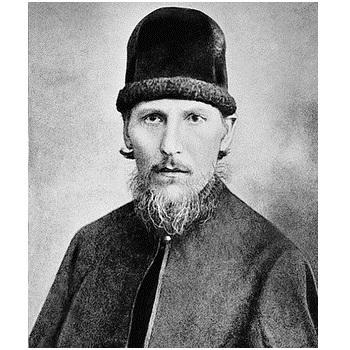
Bishop Arseny of the Urals (Belokrinitskaya Hierarchy) on the Recognition of Latin Ordinations
Arseny Ural’sky, who was canonized by the Russian Orthodox Old-Rite Church, wrote in chapter 7 of his book A History of the Existence of the Priesthood in the Old Believer Orthodox Church of Christ (2nd half of the 1860s) that in 858 the Latin heresy arose, and in 1054 the Romans were finally rejected and anathematized. But despite this, the Ancient Orthodox Church accepted Latin ordinations without repeating them, as he wrote.
To support this, he refers to St. Anthony the Roman. He was born in Rome and later went into the desert, where he was tonsured as a monk. There he encountered priests and deacons with whom he prayed and received communion. Arseny concludes that these clergy had been ordained within the Latin heresy but became Orthodox, because Anthony came to Veliky Novgorod from Italy in 1121, 67 years after the Great Schism.
He then gives the example of the Council of Florence: those who signed the union later repented and were received in their existing rank. However, it is not clearly stated whether they had originally been ordained by Latins.
A clearer example is Bishop Daniel of Vladimir and Brest, who received ordination from Metropolitan Isidore, a unionist. Afterward, Daniel repented and renounced Isidore, but he was still received in his existing rank.
He referred to the Life of St. Sava of Serbia, where it is said that Latins should be received through renunciation of heresy, confession of faith, and chrismation. He finds the same idea in the words of Niphont of Novgorod in the Kormchaia Book, and in the Potrebnik of Gedeon Balaban printed in Striatin in 1606, which also prescribes the reception of Latins through chrismation, making a remark that this Potrebnik was printed from ancient ones, as it is said in this Potrebnik.
He then turns to the book of Constantine Harmenopoulos and, in the answer of Theodere Balsamon, finds statements that Latin ordinations are recognized despite their customs, such as the use of rings by bishops (which Theodere even praises) and unleavened communion. He also refers to the book of Matthew Blastares, where he finds that Latin practices are described as seriously erroneous, but not everything in them is completely rejected because they use the name of Christ.
Finally, he lists various heresies of the Latins: the procession of the Holy Spirit from the Son, communion with Armenians, single immersion in baptism, and other customs. Despite all this, he concludes that Latin ordinations were recognized in Ancient Orthodoxy because the Latins were not considered heretics of the first rank.
