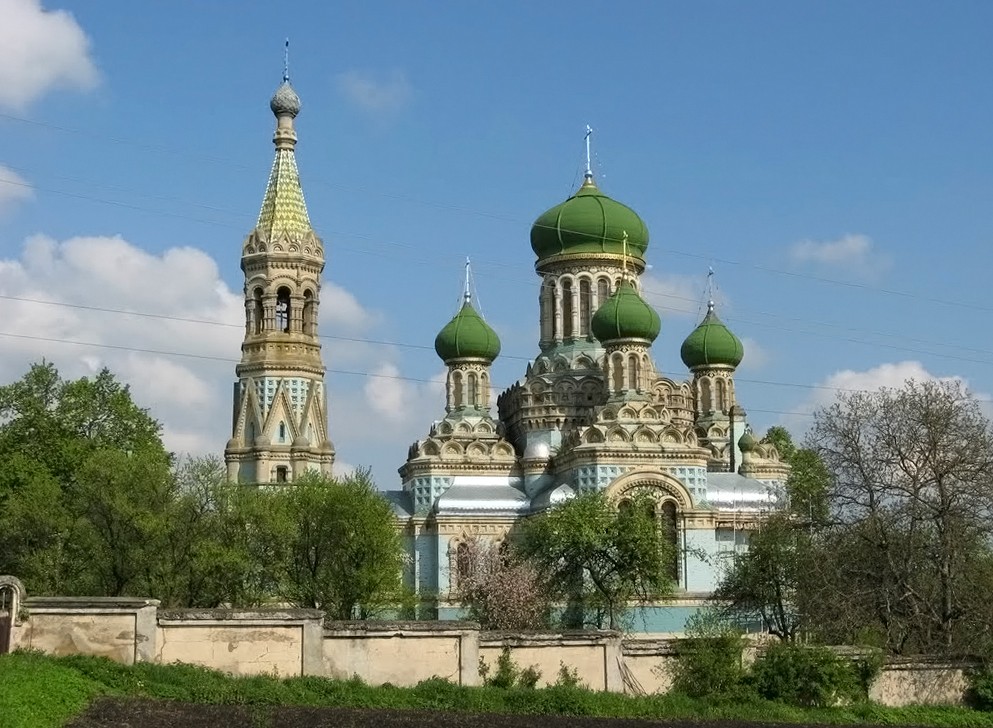
What Is the Church? The Ecclesiology of the Belokrinitskaya Hierarchy
Today, many people understand the Church mostly or primarily as a formal institution. Although a formal organization can indeed be called the Church, the definition of the Church cannot be reduced to this alone, as we can clearly see from the works of Belokrinitsky theologians. They describe the different aspects of the Church profoundly, and their insights contradict neither the ancient Byzantine understanding of the Church, nor the ecclesiology found in medieval Rus’, nor even the views of the Priestless Old Believers.
However, the practical conclusions of the Belokrinitsky theologians may be considered doubtful by some. They used these very ideas to argue that it is possible to accept priests and bishops from heretics when no Orthodox bishops are available—a position that other groups question. Paradoxically, many modern Belokrinitsky Old Believers are unfamiliar with the ideas of their own theologians. This article seeks to fill this gap, both for them and for anyone interested in the subject. As for my personal stance, while I agree with the basic assumptions of these theologians, I do not share the conclusions they draw. Nevertheless, the aim of this article is not to present my own opinion, but to describe Belokrinitsky theology, and specifically its ecclesiology. I believe that it has made a great contribution to addressing the problem of Church boundaries, which is a rather complex topic in Orthodox ecclesiology.
The Definition of the Church
Arseny of the Urals (1840–1908), a prominent bishop of this hierarchy, gives the following general definition of the Church in his work Justification of the Old Rite Holy Church of Christ (Opravdanie Staroobryadstvuyushchey Svyatoy Khristovoy Tserkvi):
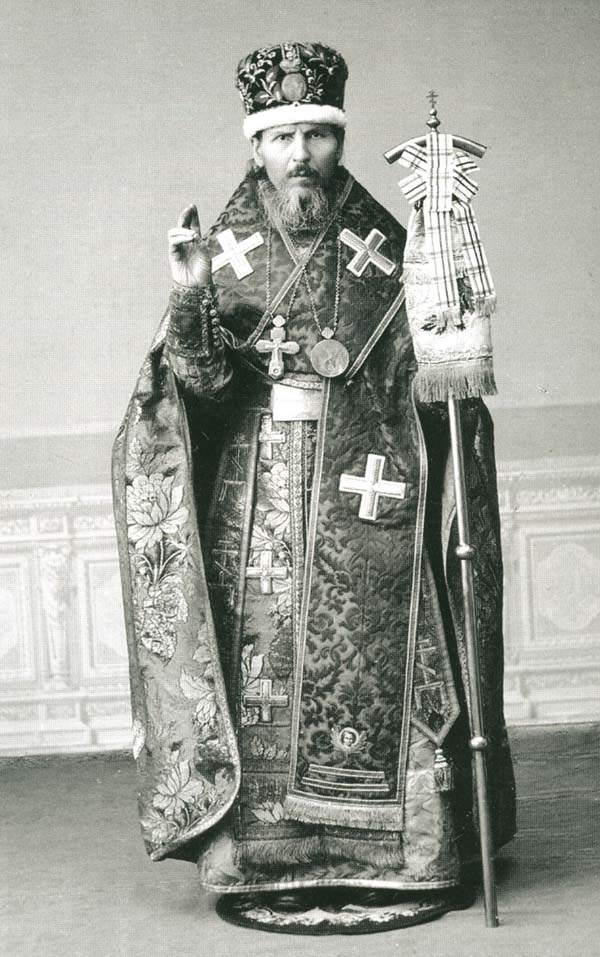
«The very name “Church” means union and assembly, while the Church of God means the voluntary reception and preservation of Divine grace by rational and free creatures. Through this grace, rational beings — insofar as it is possible for them — are united with God; and, being united with Him, they are also gathered into one with each other… Thus, it is evident that angels and human beings who voluntarily receive Divine grace in the worship of their Lord God together constitute the Church of God.»
Thus, the Church is primarily the unity of all believers. Further in the text, referring to the Great Catechism, Bishop Arseny describes the different aspects of the Church in greater detail:
«The Symbol of the Orthodox Faith enumerates many properties of the Church in order to define more precisely what it is that we profess to believe in. For many things are called by the name “Church.” According to the Great Catechism, the following are called the Church of God:
First, the Tabernacle of Moses.
Second, the Holy Place or Sanctuary (that is, the Holy of Holies in the Old Testament Temple).
Third, the temple or house of prayer.
Fourth, the parish or congregation of any given church.
Fifth, the house of any Christian.
Sixth, the Body of Christ.
Seventh, every Orthodox Christian.
Eighth, all the faithful throughout the whole world — those who now are, who were, and who shall be.
Ninth, specifically the teachers and stewards of the Church.
Tenth, all the saints in Paradise and in Heaven (Great Catechism, ch. 25). Furthermore, the Church of God, viewed in different periods of time and circumstances, is also called: the Edenic Church, the antediluvian Church, the Church of Noah’s Ark, the patriarchal Church, the legal or Old Testament Church, the New Grace Church, the Apostolic Church, and it is also distinguished according to centuries, regions, peoples, and other circumstances, which there is no need to enumerate here in detail. But when we recognize that the name of the Church of God is applied to many different things, and yet we confess the Church to be One, we are thereby taught that all the various realities and states called by the name “Church” must be related to one another. This may be compared to the many stones of a church building joined together: although each stone occupies its own place and appears to be a separate part of the temple, together they constitute only one temple. So also in the unity of the Church, people living in different periods of time, places, and circumstances may appear as separate parts; yet through their shared recognition and preservation of the holiness of the one Law of God, they together constitute one common unity.»
Here we see that while the Church manifests in various forms and aspects, it possesses an essential internal unity. From this perspective, the Church can be described as the ongoing process of remaining in the true faith in Jesus Christ.
Or, as Arseny of the Urals writes:
«The Church of Christ is nothing other than the Kingdom of God, about which Christ said to those who believe in Him: “The kingdom of God is within you” (Luke 17:21).»
Tradition, Councils, and the “Tower” of the Church
This process of spiritual growth and preservation will continue until the end of the age:
«But since the holy apostles did not personally encounter all the circumstances with which the Holy Church meets throughout the present age, they therefore could not in advance determine in detail all the doubts that might arise within it. Rather, each of these is more definitively resolved in its own time by the successors of the holy apostles and by all Orthodox Christians. And therefore it is evident that through them all, until the end of the age, in every clarification of the truth of Christ’s divine economy, Christ will speak.»
However, this process develops strictly in the light of the correct teachings established by the Apostles and the Ecumenical Councils. This does not mean we mechanically or literally repeat everything they said; rather, what matters most is understanding the fundamental, overarching principles of Holy Tradition:
«Thus, if conciliar decrees stand above the reasoning of private individuals, it is evident that greater councils must surpass lesser ones; therefore, Ecumenical Councils are preferred to local ones. However, such preference among councils is observed only when neither in the greater nor in the lesser council the true Lord’s truth is distorted. For the Council of Union declares concerning this: “Every council that follows the holy councils before it is holy; but that which does not follow them is not holy, but is defiled and rejected” (Kormchaya, ch. 71, fol. 641). And therefore the Holy Church sometimes accepts into its guidance the definitions and decrees of many, even minor local councils, while at other times it rejects even those councils which claimed the name of Ecumenical, such as the one held under Constantine at Ariminum and Seleucia, consisting of 600 bishops; another under Emperor Constantine Copronymus in Constantinople, consisting of 333 bishops; and a third under Pope Eugenius in Florence. And the Great Catechism expresses this as follows: We believe in One Holy, Catholic, and Apostolic Church, that is, we trust in the teachings and dogmas of the holy apostles and the holy Ecumenical Councils, and not in men.»
Bishop Arseny compares the Church to a tower being built by every believer until the Second Coming of Christ:
«And the apostolic man Hermas also saw the Church of God in the form of a tower still in the process of being built, the completion of which, before the end of this age, was foretold to him (The Shepherd, Vision 3). Therefore, concerning the creation of the Church of God, it may be said that in the beginning God created it in His predetermination of its entire destiny, and by bringing into being all creatures for it. In His divine economy He also created—or, more precisely, re-created it—by granting life to man, who had died through the Fall, and by showing him the path of salvation to eternal blessedness. In the course of this path, among believers, it is built up throughout the entire present age. But when Christ Himself comes again to judge the works of all men, to render to each his due reward, and to grant His heavenly Kingdom to the righteous before Him, then the building of the Church of God will be fully completed; and it will be, as the holy John testifies in Revelation, the holy city, the New Jerusalem, coming down from God out of heaven.»
This architectural metaphor was also used by Father Ioann Kudrin (1870–1960), a prominent priest of the Belokrinitskaya Hierarchy, in his work How the Holy Fathers Thought about the Orthodox Church. However, Kudrin offers an even broader definition of the Church, encompassing every being who believes in God in the most universal sense:
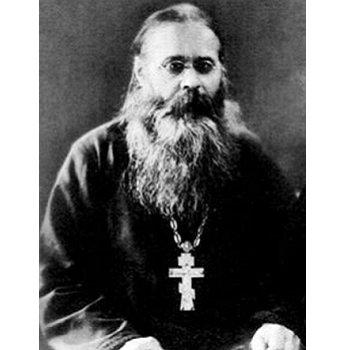
«To the Church, in the broadest sense of the word, belong all rational beings — angels and human beings who believe in God. “That God may be all in all” (1 Corinthians 15:28). This is the Universal Church. In a less extensive sense, the Church consists of people who believe in Christ the Savior. This also includes all Old Testament people, because they too were saved by faith in the coming Savior (Hebrews 11:39), as well as all those who have now died in faith and repentance, and all those who are living in expectation of salvation. The separate great parts of the Church, according to their characteristic features, also have their own names, for example: the “Old Testament” Church — before the coming of the Savior into the world; the “New Testament” Church — after His coming; the “heavenly” or “triumphant” Church, which consists of beings who have completed their earthly course and who live in heaven with their souls; and the “earthly” or “militant” Church, as Blessed Augustine says (Book of his “Manual,” ch. 54), which consists of believers living on earth.»
The Role of the Hierarchy and Sobornost
In this context, Father Ioann writes that the hierarchy bears the responsibility to model and teach a virtuous, faithful life, but lacks any right to dominate the laity:
«Therefore, “hierarchical rights” do not constitute any privilege in relation to the general calling and dignity of believers. Before the face of the Lord God and before His law, all believers are equal. None of them, by virtue of any hierarchical rank, is elevated as a Christian above any other member of the Church. The apostles themselves were not above the Church, but within the Church, as its members, under the one Head shared by all believers — Christ. Every claim to dominion over the members of the Church is contrary to the God-established order within it and leads to the distortion of the church structure (Matthew 20:25–28; 23:8–12; 1 Peter 5:3–5).»
He then proceeds to explain the true meaning of the Church being sobornaya (conciliar or catholic):
“From what has been said above, we see that the Church, as that which brings everyone into unity with God and sanctifies all by the grace of the Holy Spirit, consists of all believers in Christ and embraces all people who have accepted the Gospel in all times, places, and nations. No differences in human status or position matter for entering the Church and remaining in it, provided there is faith in Christ in their hearts: here ‘there is neither Greek nor Jew, circumcision nor uncircumcision, barbarian, Scythian, slave nor free, but Christ is all and in all’ (Colossians 3:11). Therefore, the Church is universal, worldwide, catholic, or what is the same, conciliar (sobornaya). No member, nor any part of it in the form of a particular church, should separate itself from the whole, nor confine itself within narrow limits of its own life, especially on the basis of any human, earthly considerations: national, political, etc.”
Degrees of Belonging to the Church
One might assume these theologians teach that all believers belong to the Church equally, but the reality is more nuanced. Their core argument is that the Church is primarily the spiritual Body of Christ, which manifests in the material world through the lives of the faithful. A person belongs to this Church only to the extent that they are virtuous and truly faithful. When we commit sin or harbor false beliefs, we distance ourselves from it:
«…nor is even he excluded from the holiness of the Church who, despite all his desire and because of the simplicity of his heart or ignorance beyond his control, does not receive the proper sacramental sanctification. However, this can be said only of people who live a virtuous and God-pleasing life, but for some reason lack the fullness of sacramental, grace-filled sanctification… On the other hand, many also deprived themselves of membership in the holy Church through their own lack of faith and negligence in moral self-improvement, even though they did receive sanctification in the Church’s sacraments.» (Arseny of the Urals, “On the Essence and Attributes of the Church of Christ”)
Yet, because it is difficult to claim that any person is completely and absolutely sinful or heretical, everyone retains at least a partial connection to the Church:
“However, even those who fall into heresy are not entirely excluded from belonging to the Church of Christ, so long as they still remain, at least in some parts of their confession, in agreement with the Holy Gospel, even if not completely.” (Arseny of the Urals, An Essay on “A Critique…” of M. Shustov’s “Apology of the Old Believer Hierarchy” by A. Shevtsov)
At the same time, if an individual formally fulfills the necessary conditions to belong to the Church as an institution, they belong to its visible aspect. We cannot know for certain whether they truly belong internally, as their inner faith remains hidden from us. This inner state is their personal responsibility before God; we have neither the right nor the means to judge it definitively.
Crucially, this does not imply that one is permitted to pray with those outside the formal Church organization—a boundary made entirely clear throughout the works of Arseny of the Urals and the wider Belokrinitsky tradition.
The Visible vs. The Invisible Church and the Fallibility of Clergy
Interestingly, Bishop Arseny suggests that certain historical practices tolerated within the visible Church could actually be non-Christian. For him, the visible institution is not entirely identical to the spiritual, invisible Church:
«But certain customs tolerated until the time of the Church’s greater perfection—such as remnants of pagan and Jewish practices—were abolished and completely removed when they first became obstacles to the greater progress and expansion of the Christian Church. This is shown in the interpretations of Canon 11 of the Council of Laodicea.» (Justification of the Old Rite Holy Church of Christ)
Furthermore, Arseny of the Urals argues that hierarchs do not possess personal immunity from error. The true essence of the hierarchy lies in the duty of the clergy to preach and preserve the truth. Those who fail in this sacred duty effectively separate themselves from the Church and may be abandoned by the laity:
«Thus, whoever understands the essence of church hierarchy not merely in the persons who are members of the hierarchy, but together with the proper fulfillment of their sacred duty in the preaching of truth, and whoever separates himself from those who do not follow or who violate this sacred duty — such a person, we are confident, will undoubtedly be a son of the holy Apostolic Church. But in the opposite case, by pursuing only the outward appearance of hierarchical persons, one may very easily lose the very essence of hierarchy itself; and if the hierarchs fall into error, such a person will inevitably lose true sonship in the Apostolic Church.» (“On the Essence and Attributes of the Church of Christ”)
Bishop Arseny strongly opposes the notion that the hierarchy is structurally shielded from failure by divine intervention, comparing such an idea to Papism:
“…that God preserves the hierarchy independently of our will — this, properly speaking, is the infallibility that the Papists dogmatize.” (An Essay on “A Critique…” of M. Shustov’s “Apology of the Old Believer Hierarchy” by A. Shevtsov).
In the same work, he explains that the Church operates in two dimensions: one is spiritual and unfailing, while the other is visible and fallible, manifesting through sinful human beings who may distort the Church’s expression without ever completely destroying it. Consequently, he notes that even heresies can temporarily be found within this visible part of the Church.
He applies a similar dualism to the sacraments, stating they possess both a formal and a spiritual side. Because of this, heretics can retain the formal side of a sacrament, and even a partial degree of its spiritual reality. He compares their sacraments to a bill of exchange that can be cashed in the future: it is “realized” and conveys grace when the true faith is received and the person fully enters the Church.
In another vital work, Confession of Faith in the Symbolic Church, Arseny of the Urals puts forward two crucial propositions: first, that the spiritual and mystical essence of the Church makes it impossible for human reason to fully comprehend; second, that even during the historical periods when the Old Believers lacked bishops, they remained inside the true Church:
“…we nevertheless entered into the composition of the One Holy Catholic and Apostolic Church, which from all ages and places is gathered from among those who believe in it.”
For him, it is sufficient that a formal episcopacy continues to exist among heretics, thereby preserving the structural principle of the hierarchy. Thus, he does not regard the historical Belokrinitskaya Church as absolutely identical with the total Church of Christ. Instead, the two closely overlap: the Belokrinitskaya institution, through its traditional ritual life and correct dogmatic teaching, forms a distinct, visible part of the universal Church of Christ, which remains vastly greater than any single institution. At the same time, as a visible community, it represents the most adequate form of expression of the Church of Christ, while episcopacy, certain Orthodox practices, and elements of grace (namely, the formal sacramental validity) can also be preserved in other churches. However, this does not imply for him that these communities possess the fullness of grace, nor that Old Believers can “receive” or “appropriate” grace from them as from a valid source.
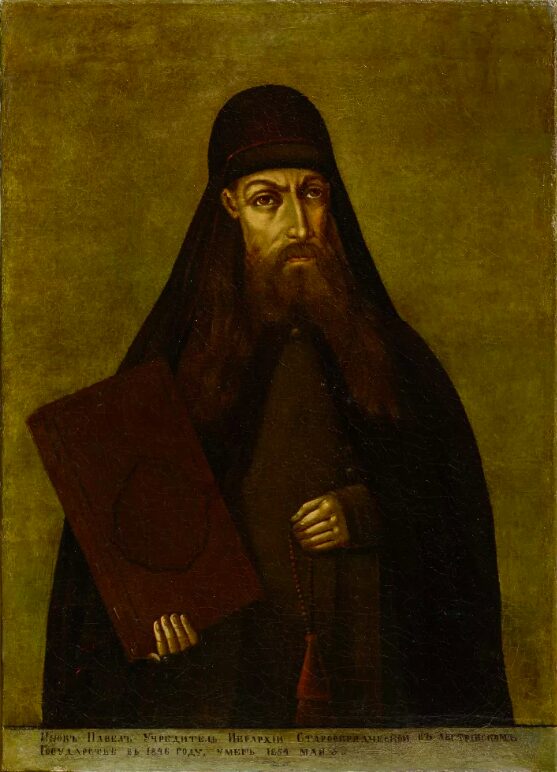
The authoritative monk of the Belokrinitskaya confession, Pavel Velikodvorsky (1808–1854), wrote in his book Disputations with the Bezpopovtsy that heretics (of the second and third order) possess sacerdotal and rite-performing grace, but lack perfecting and confirming grace.
Conclusion
In contrast to this rich theological heritage, some modern Belokrinitsky Old Believers mistakenly—and contrary to the authentic teachings of their own tradition—equate their formal institution directly with the total Church of Christ, viewing their bishops as infallible leaders.
However, as the famous Belokrinitsky apologist Fyodor Melnikov points out in his book An End to Doubts Concerning the Legitimacy of the Old Believer Hierarchy, this view is an ideological error borrowed from Roman Catholicism. To illustrate this, Melnikov approvingly quotes the 18th-century Patriarch of Jerusalem, Dositheos II:
“They are obvious impious men and schismatics, because they make a particular church into the universal Church, and instead of Christ they venerate the pope as the head of the Church.”
